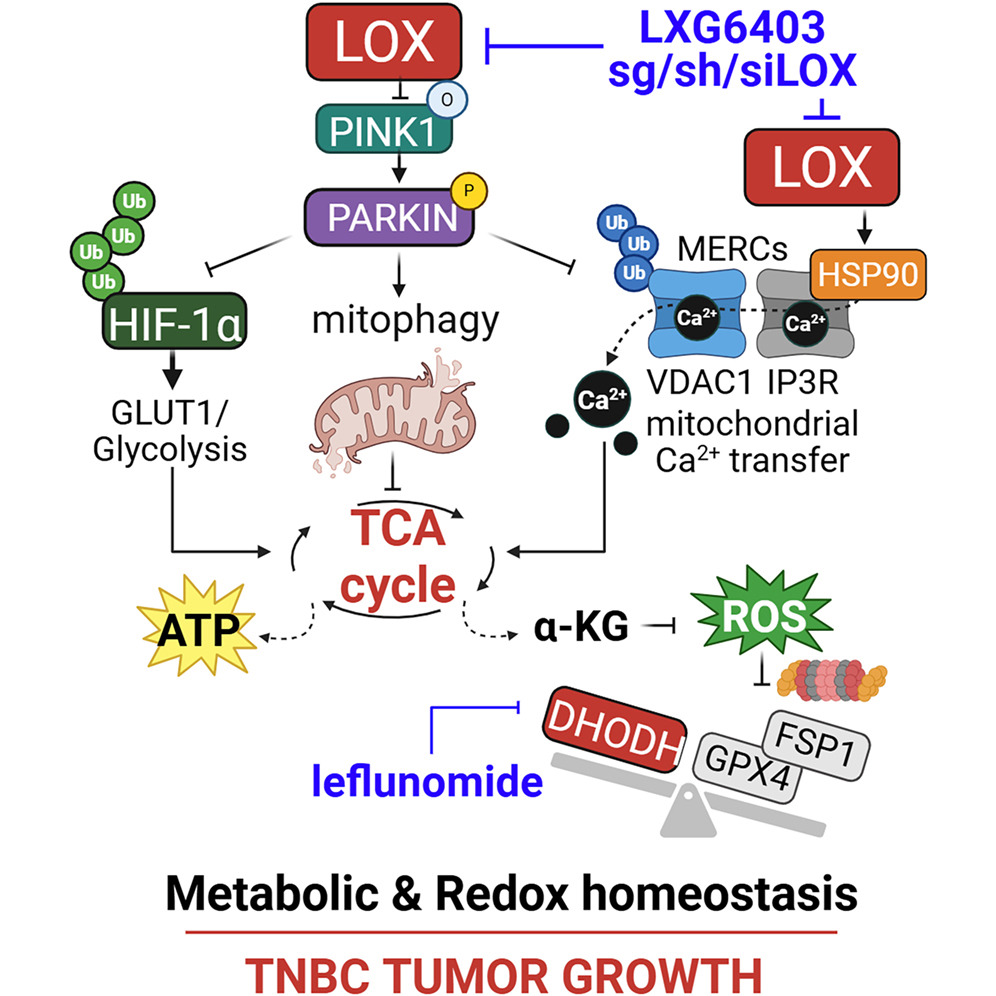
Our latest study, published in Cell Reports Medicine, uncovers an unexpected intracellular role for lysyl oxidase (LOX), traditionally known as an extracellular matrix regulator, in maintaining mitochondrial homeostasis and protecting triple-negative breast cancer (TNBC) cells from ferroptosis. Pharmacological inhibition of LOX with our best-in-class inhibitor, LXG6403, disrupts mitochondrial homeostasis and weakens ferroptosis defense mechanisms. As the cancer cells adapt, they become increasingly dependent on the backup DHODH pathway, creating a vulnerability that can be targeted with the clinically available DHODH inhibitor leflunomide. This “one-two punch” strategy could provide a potential chemotherapy-free approach for treatment-resistant TNBC.
https://www.cell.com/cell-reports-medicine/fulltext/S2666-3791(26)00432-5
0 Comments